
Between April and August 2024, four author service organizations—Amplify Publishing Group, Gotham Ghostwriters, Smith Publicity, and Thought Leadership Leverage (TLL), working with author and former Forrester SVP Josh Bernoff, conducted a survey of business and other nonfiction authors.
The survey sought to analyze factors most likely to generate a positive return on investment (ROI) for authors pursuing book projects. Bernoff, TLL COO Bill Sherman, and TLL Organizational Psychologist and Psychometrician Dr. AJ Marsden collaborated to design the survey instrument. The survey design was based on an earlier pilot survey that Bernoff conducted for the book Build a Better Business Book.

DATA HIGHLIGHTS
The survey reached a diverse collection of 350 authors and prospective authors, of which 301 had published a nonfiction book. Two-thirds of them had published multiple books.
Our analysis showed:
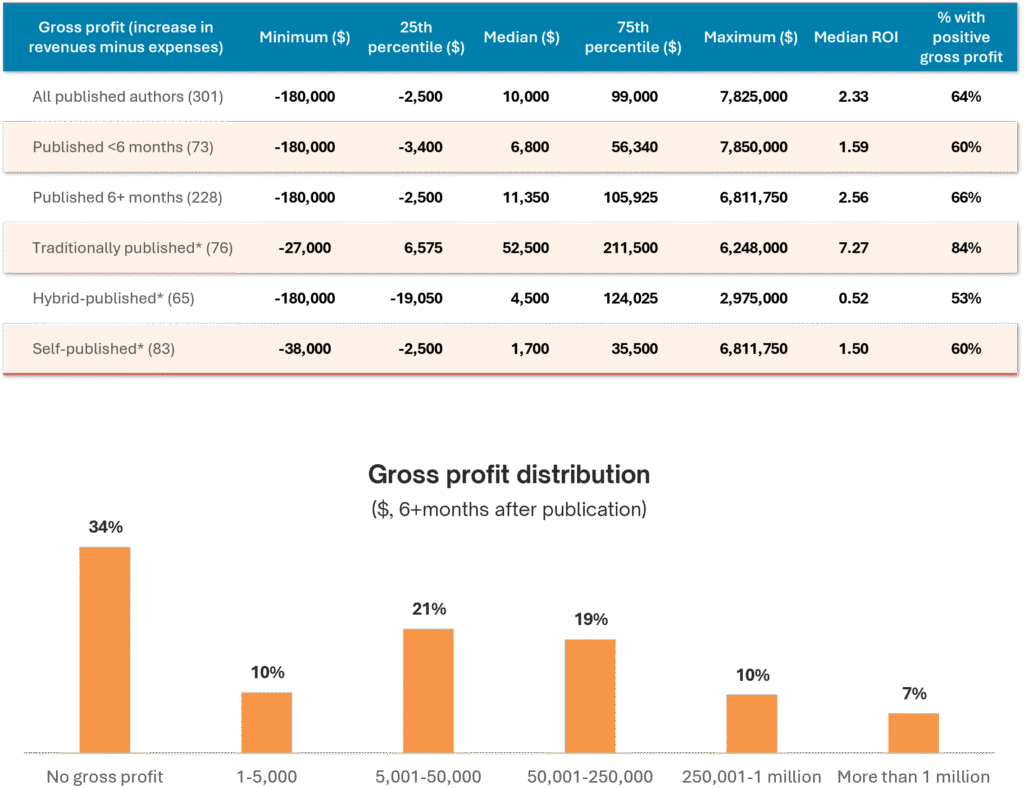
- Fully 64% of business books showed a gross profit. The median profit for books out for at lease 6 months was $11,350.
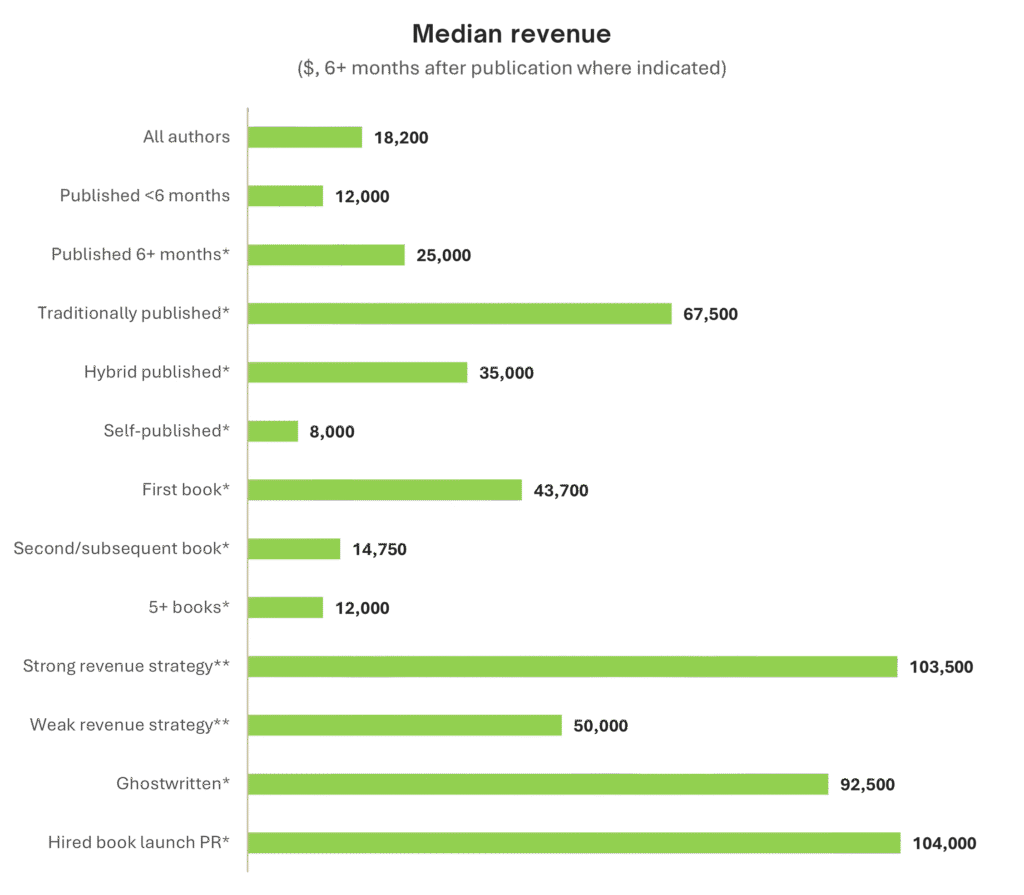
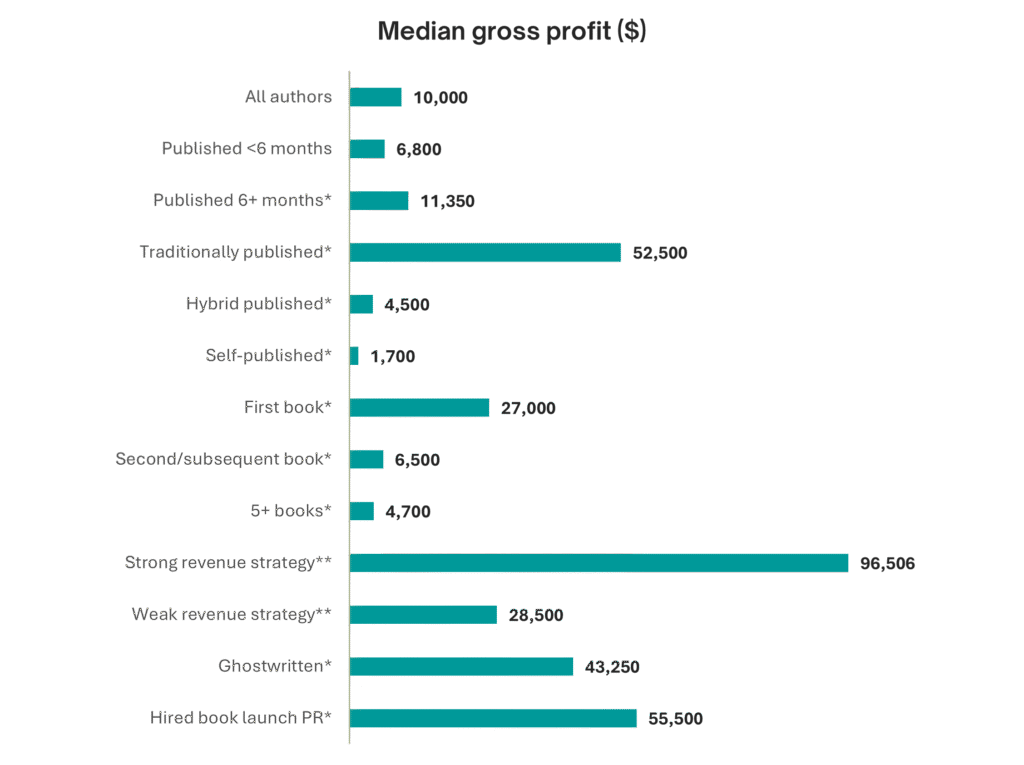
- Launch PR, ghostwriters, and revenue strategy were correlated with profit. Books with Launch PR teams had a median gross profit of $55,500; those with a strong revenue strategy, over $96,000. The median Ghostwritten book was four times as profitable as other books. Books generated an average of $1.24 in revenue per dollar spent
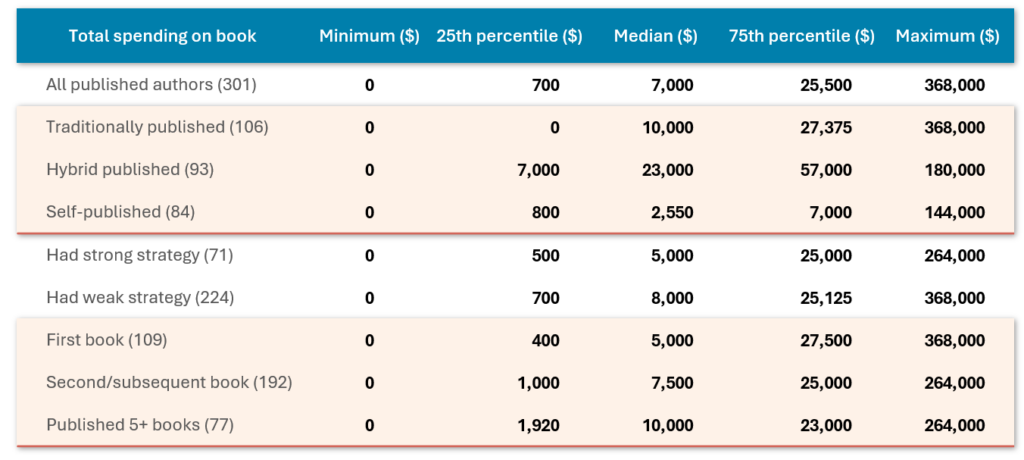
- Authors spent money to make their books successful. The median spending was $7,0000 across all expense categories, but the median hybrid published author spent $23,000. Half of the authors reported unexpected costs. Authors commonly Paid the for ghostwriters and book launch PR.
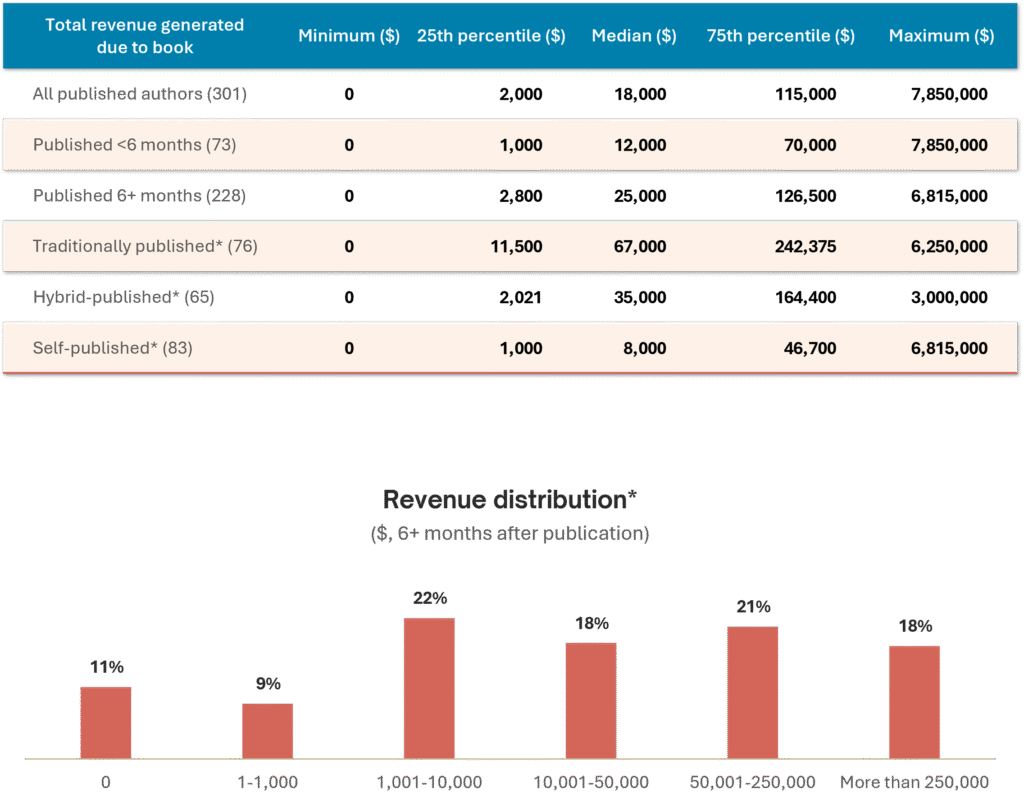
- The Median Book generated $18,200 in revenue. Traditionally published books more than tripled that amount, and hybrid published books nearly doubled it. Among authors with books out 6 months or more, 18% reported $250,000 or more in income. Speaking, consulting, and workshops generated much more income than book sales and royalties.
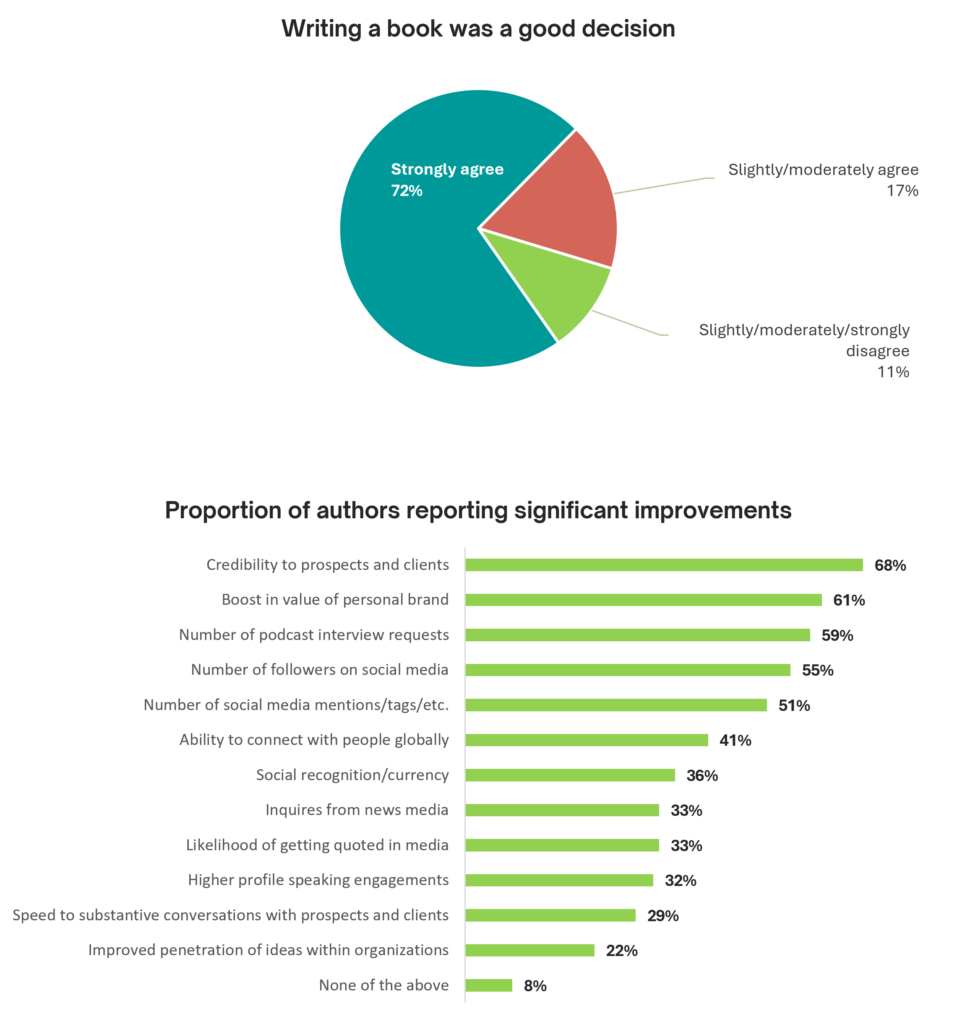
- Authors boosted their brands. More than 90% reported some form of nonmonetary value in their books, and 89% said writing a book was a good idea.
- The top marketing tactics were email campaigns and Amazon reviews. The most popular social media tactics were posting on LinkedIn and promoting on blogs. X was one of the worst marketing channels.
- Most authors accomplished their goals. These included sharing their knowledge, elevating important topics, and boosting their reputations.
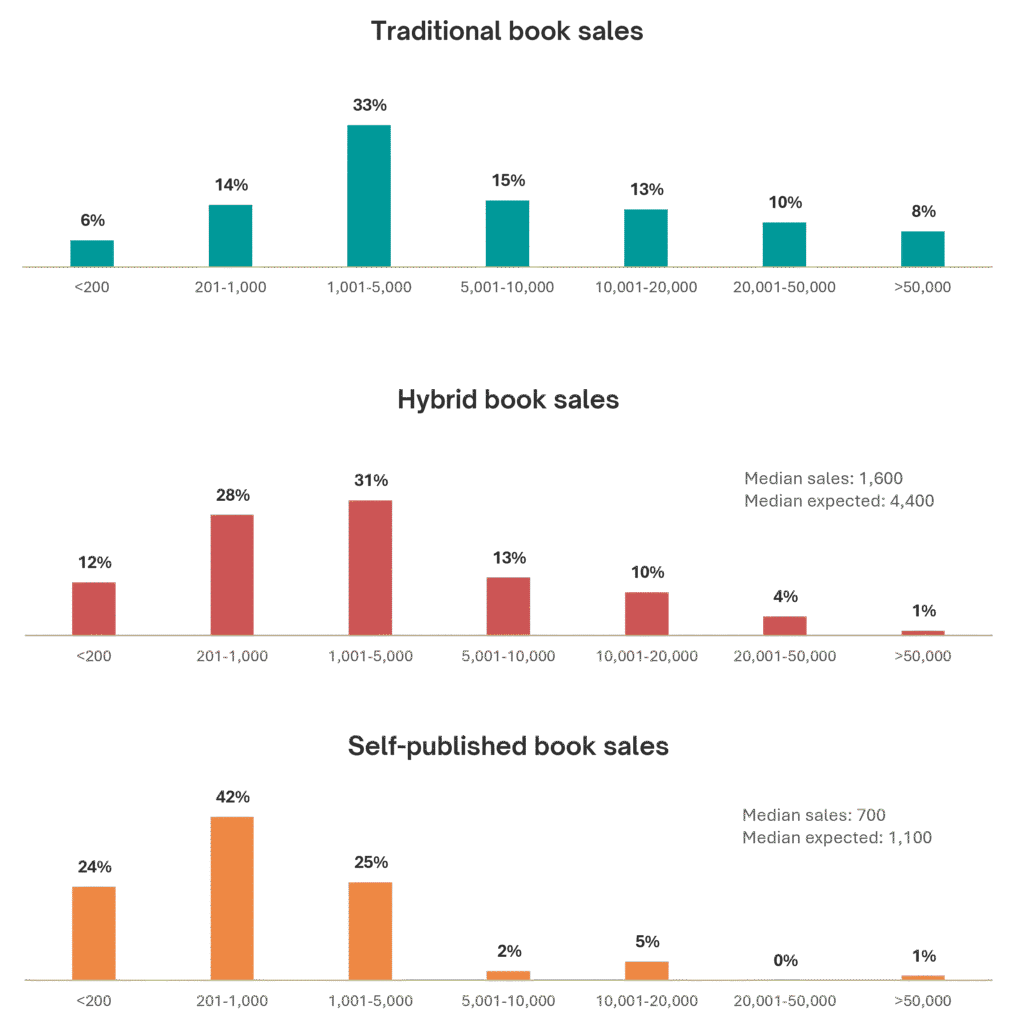
- Book sales rarely met expectations. Median sales were 4,600 for traditionally published books, 1,600 for hybrid-published books, and 700 for self-published books. But book sales didn’t predict success or ROI.
- Hybrid publishers delivered better service. The authors were almost evenly split between those with traditional publishers, those who had worked with hybrid publishers, and self-published authors. Authors with hybrid publishers were more than twice as likely to strongly agree that they were satisfied with their publishers.
Author Respondent Profiles
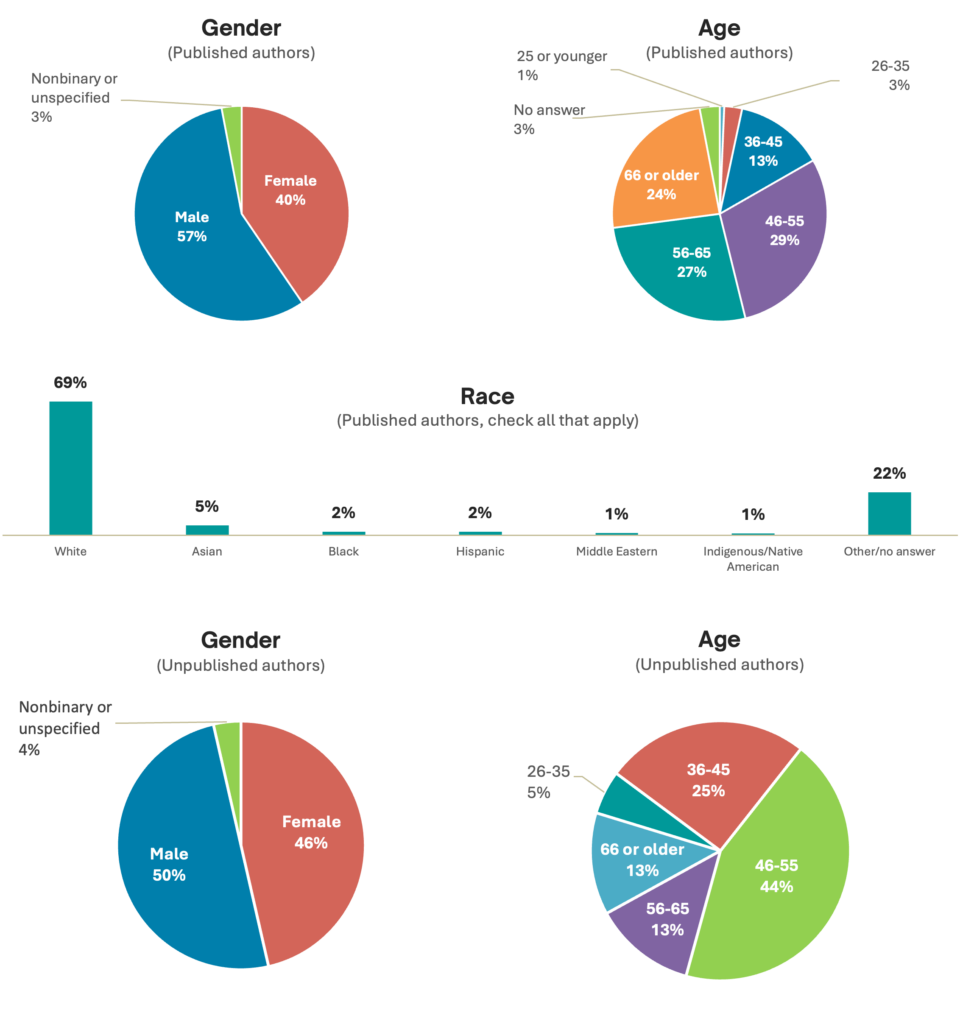
AUTHORS WERE BALANCED BY GENDER WITH A MEDIAN AGE OF 56
Authors who responded were 57% male, 40% female, and overwhelmingly white. Most were between the ages of 46 and 65; half were 56 or older. Geographically, 86% were from North America, while 8% were European; the rest were scattered across the globe. Authors who were not yet published were somewhat younger, with a similar gender split.
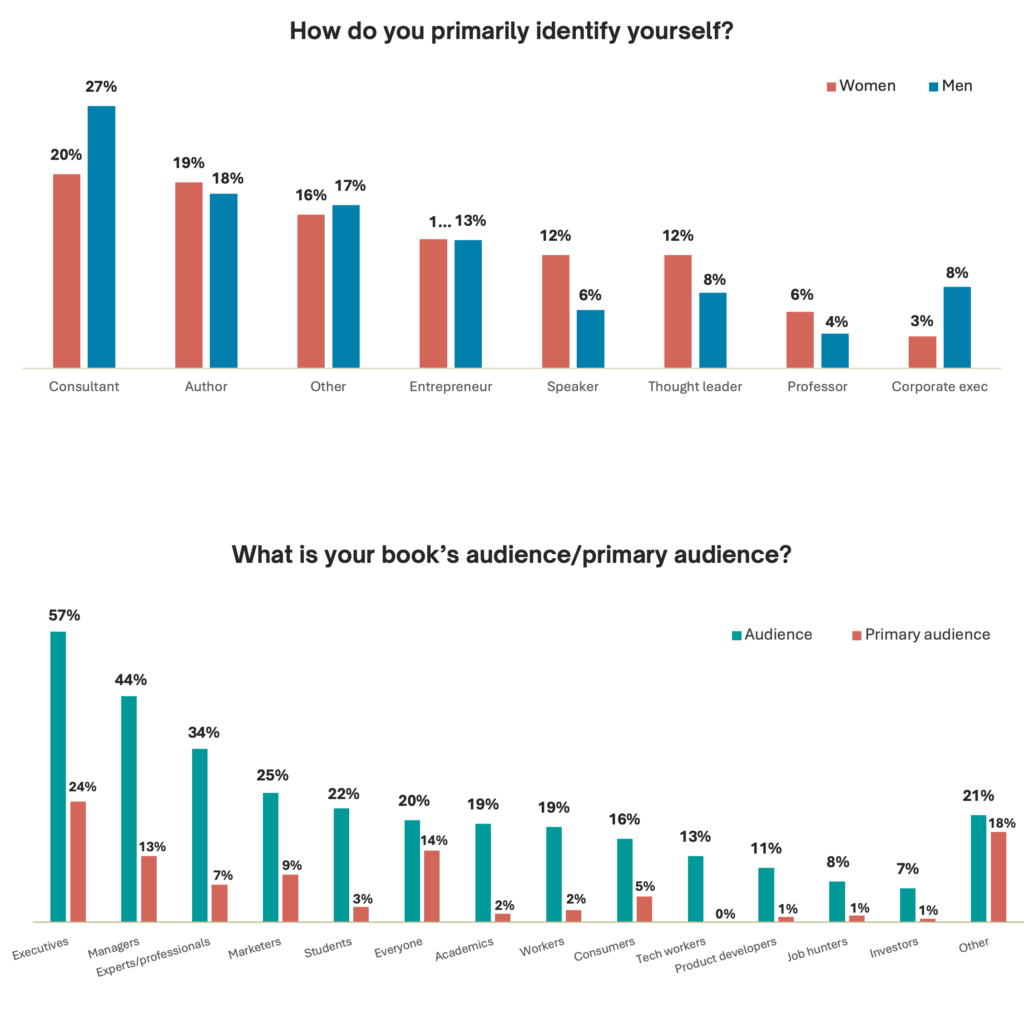
PUBLISHED AUTHORS HAD DIVERSE TARGET AUDIENCES AND IDENTITIES
Those who had published books were most likely to identify themselves as consultants, authors, entrepreneurs, and speakers; women authors were somewhat more likely than men to say they were speakers or thought leaders. Authors’ books targeted a variety of audiences including executives, managers, professionals, marketers, and students.
(Note: Categories may not sum to 100% due to rounding or multiple responses.)
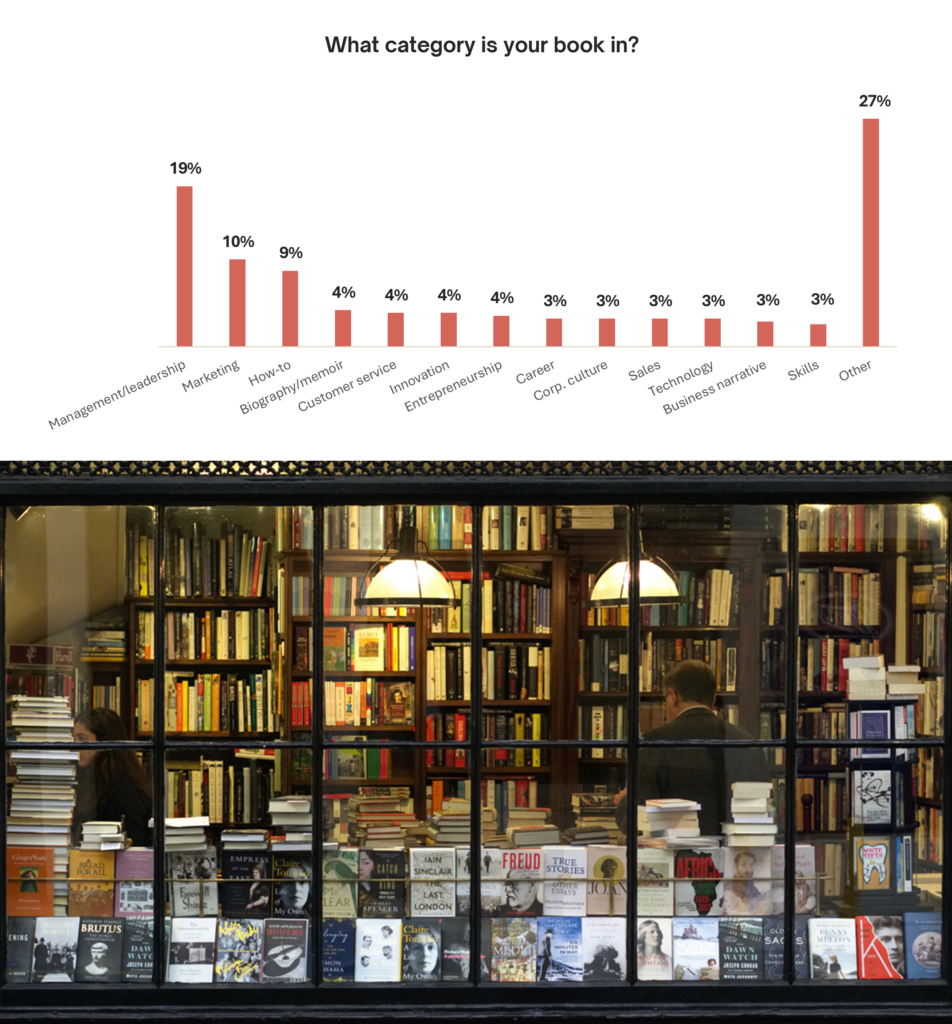
Book Categories Were Diverse
The authors in the survey had books in a wide variety of categories. Management/leadership, marketing, and how-to books were most common.
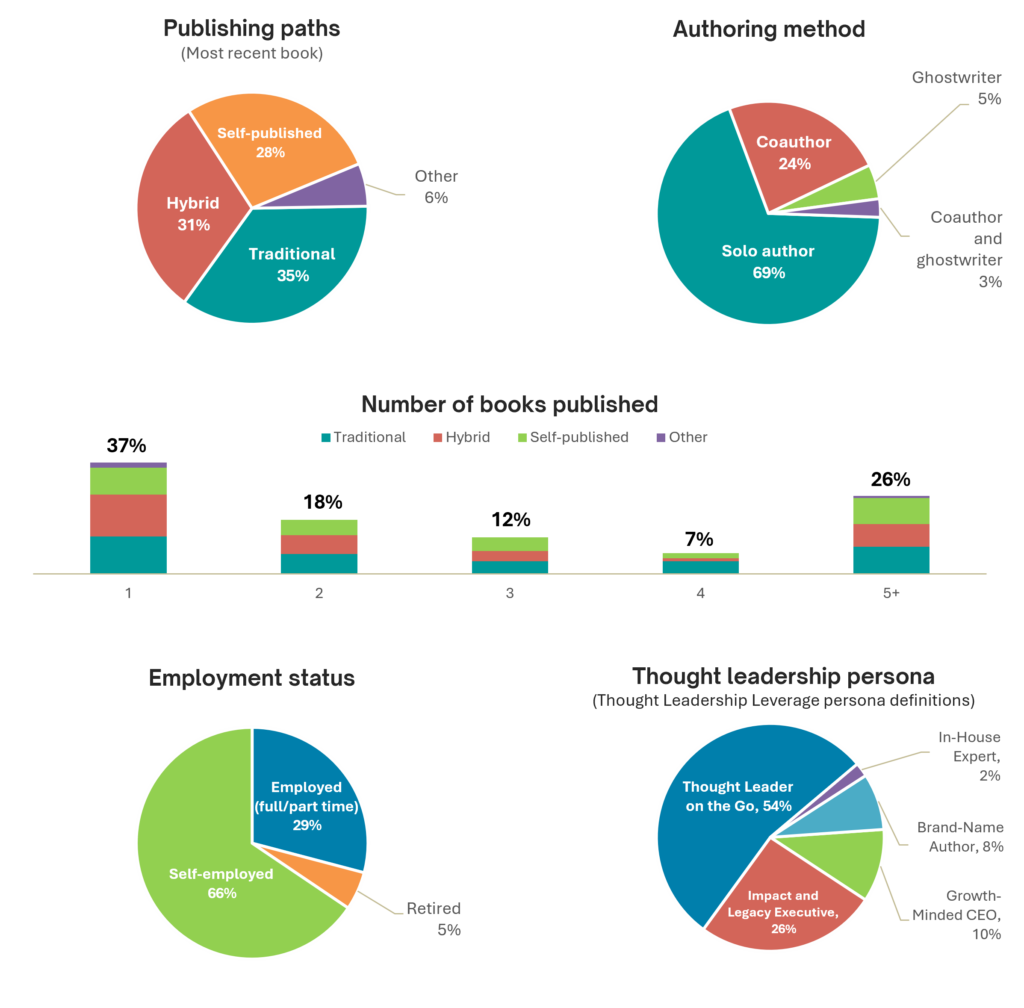
Authors have extensive experience, use varied publishing paths
Respondents pursued three main publishing paths for their most recent books: securing deals with traditional publishers, hiring hybrid publishers to produce their books, or self-publishing. (As we show in Parts 3 and 4, different publishing paths lead to different spending and revenue profiles.) One in four worked with a coauthor, and one in twelve with a ghostwriter. Two-thirds of published authors had published multiple books. Two-thirds were self-employed; 54% fit the thought leadership persona “Thought Leader on the Go.”
AUTHOR MOTIVATIONS AND METHODS
Most Authors Accomplished Their Goals
Authors’ top goals were to share their knowledge, elevate a topic that needs attention, and boost their reputations. They accomplished most of their goals, but some found it harder to succeed with changing opinions and selling books. For each goal, less than 67% had a solid plan. And while 82% had the success they expected with sharing their knowledge, less than half achieved expected success with changing opinions or book sales.
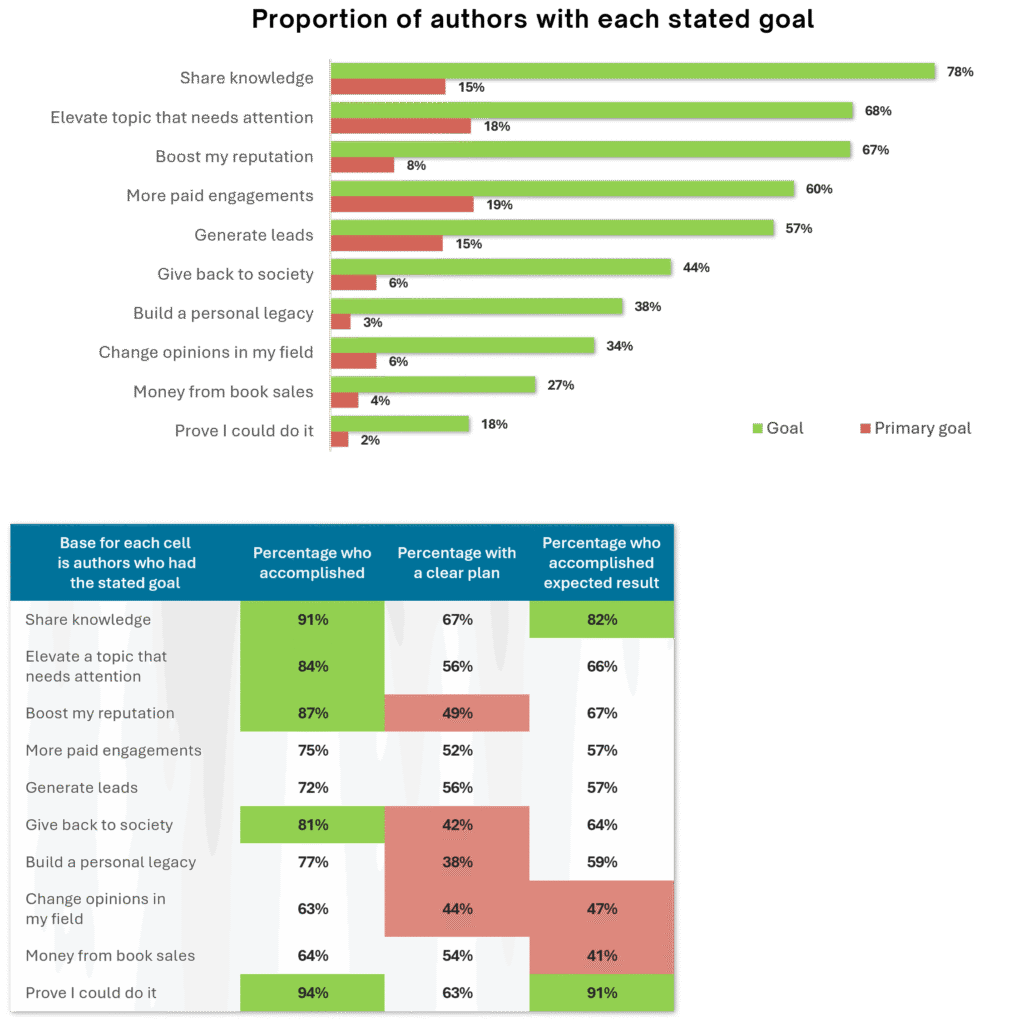
single step outlined” or “I had a moderately specific plan for achieving my goal with a few
steps outlined.” Percentage with expected results includes respondents who chose “strongly agree” or “moderately agree” in response to the statement “My process for accomplishing this goal went as expected.” Table highlights indicate notably high
or low responses.
Authors’ Employers and Their Families Were Generally Supportive
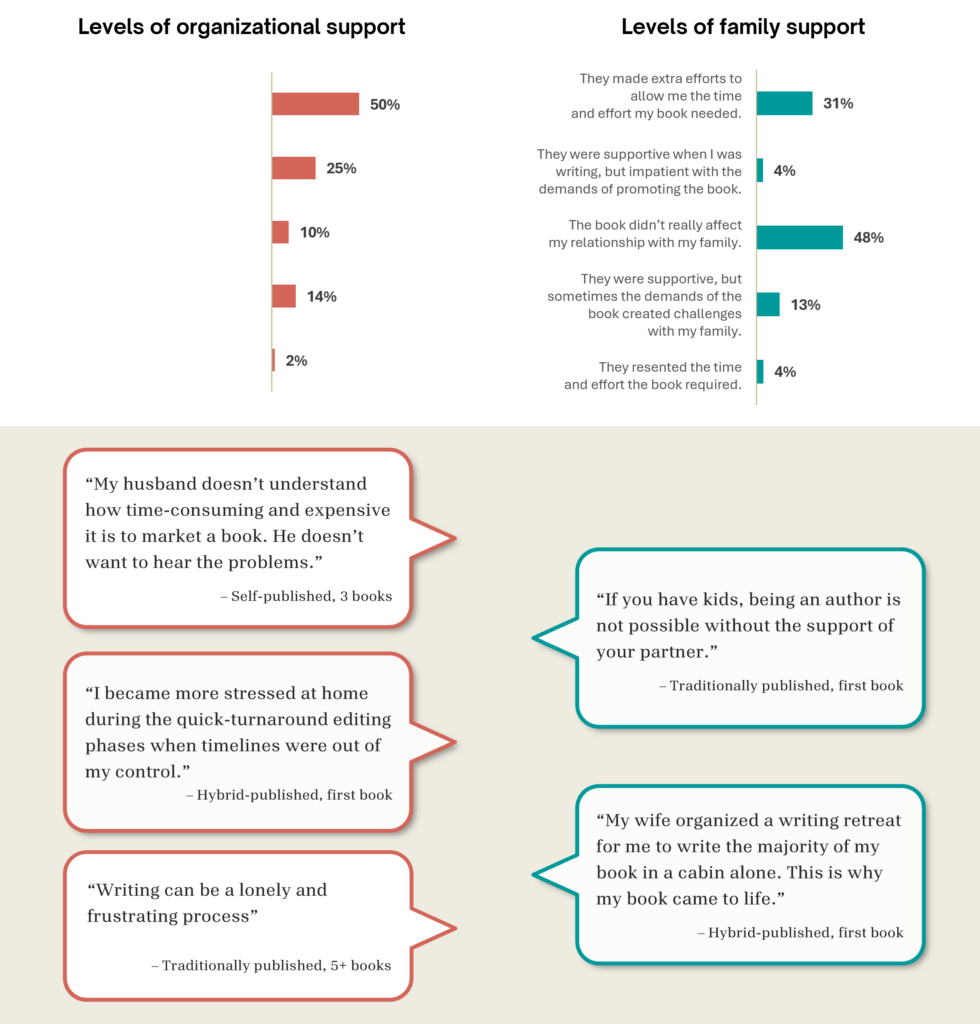
Among the 124 authors who worked within organizations, 50% said their organization was an integral partner in the process. Half of the authors said that their books didn’t affect their family relationships, and another one-third said their family made extra efforts to support them. These results were fairly consistent regardless of the gender of the authors.
Authors Were Efficient, More Satisfied with Hybrid Publishers
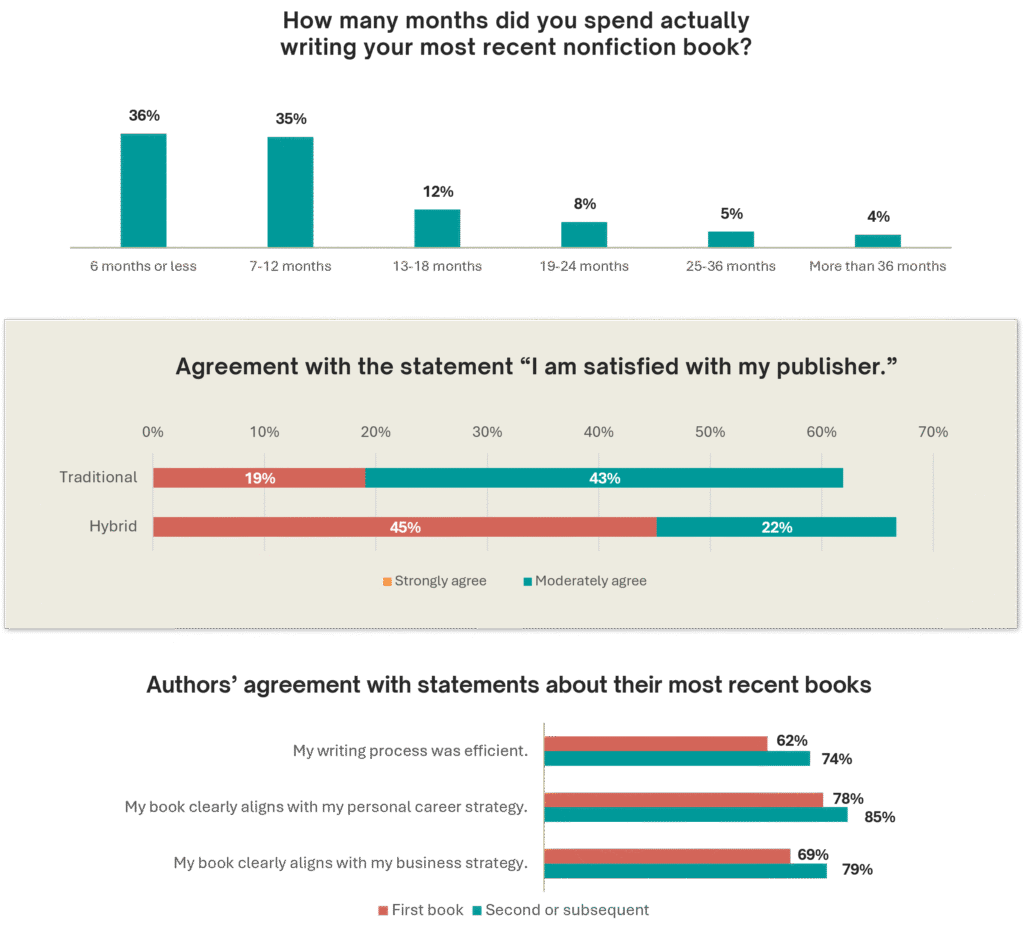
The median author spent 10 months writing their book. Traditionally published authors typically spent 12 months, while self-published authors spent only 6. While more than 70% of traditionally published and hybrid-published authors agreed that they were satisfied with their publishers, hybrid-published authors were twice as likely to volunteer strong agreement. Authors, especially experienced authors, agreed that they used an efficient process that aligned with both their personal career strategy and their business strategy.
Book Sales Generally Fell Short of Expectations
Among traditionally published books, 18% sold more than 20,000 copies; for hybrid-published, 5% sold that many. The median number of books sold was 4,600 for traditionally published books, 1,600 for hybrids, and 700 for self-published books. These numbers were a fraction of what authors were expecting. Book sales were not the primary predictor of success; many authors accomplished their goals despite selling fewer books than expected.
SPENDING
Median Spend Per Book was $7,000, Including a Wide Variety of Services
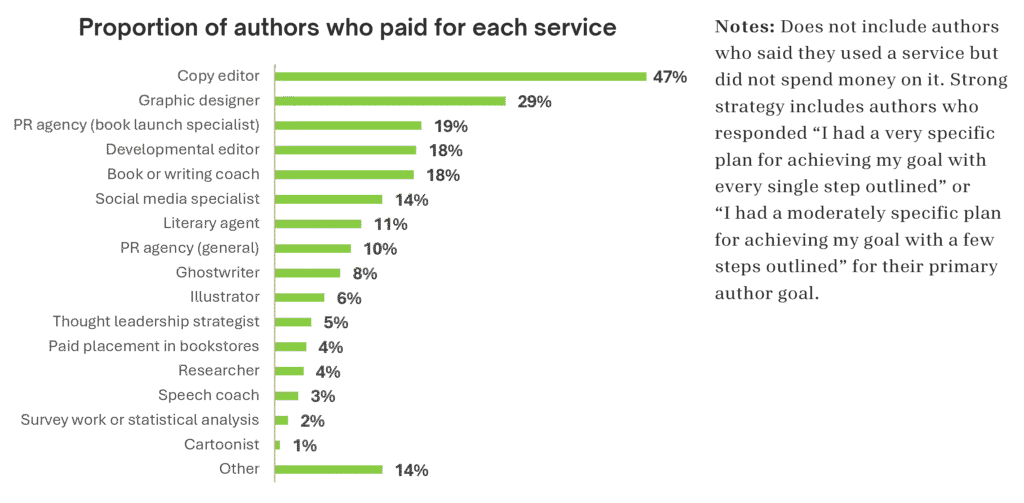
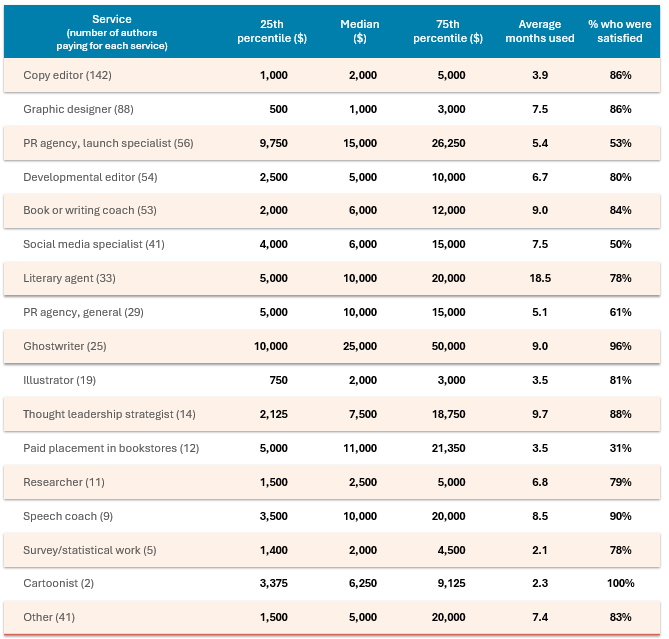
The most expensive items, among authors invested in them, were ghostwriters, PR agencies, and paid placement in bookstores. Authors were mostly satisfied with the services they paid for, including 96% of those who used ghostwriters, but only about half were happy with the result from money they spent on paid placement in bookstores, social media specialists, and book launch agencies.
The Most Expensive Services Were Ghostwriters and PR Agencies
The most expensive items, among authors invested in them, were ghostwriters, PR agencies, and paid placement in bookstores. Authors were mostly satisfied with the services they paid for, including 96% of those who used ghostwriters, but only about half were happy with the result from money they spent on paid placement in bookstores, social media specialists, and book launch agencies.
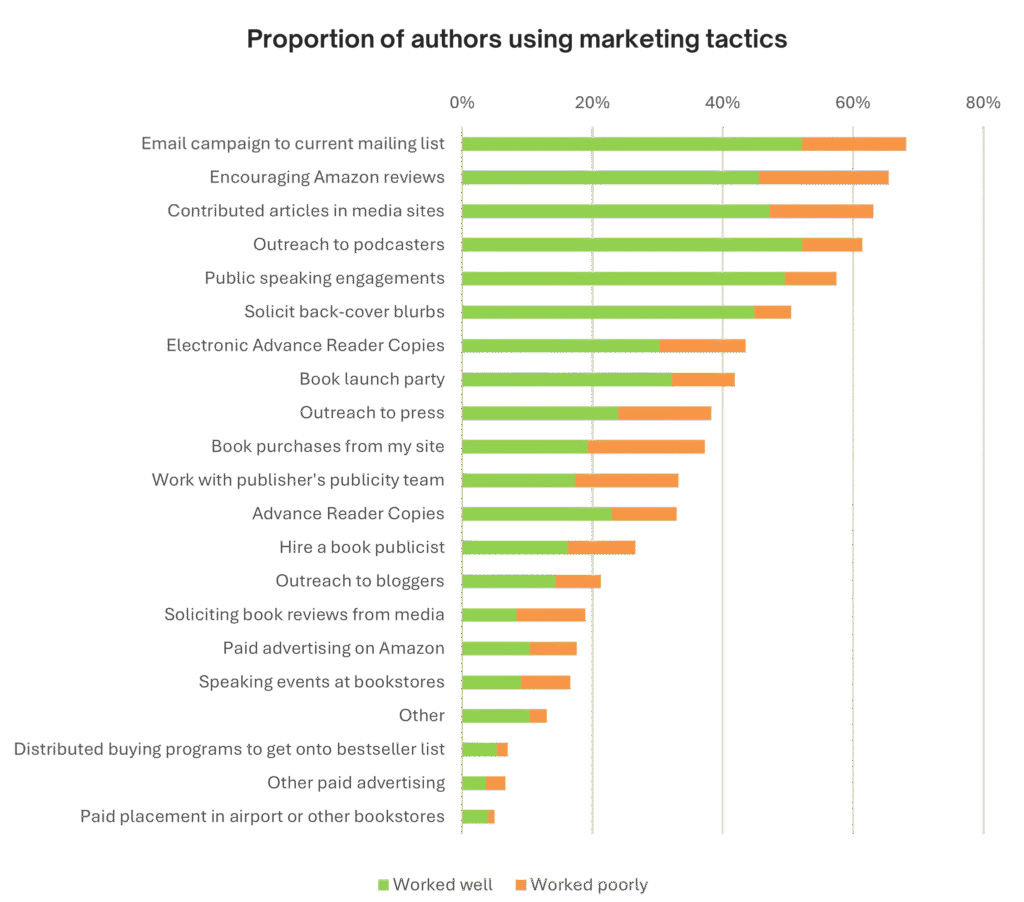
Email, Amazon reviews, and Contributed Articles Were Popular Marketing Tactics
Two-thirds of authors reached out to their existing mailing lists; nearly as many solicited Amazon reviews and contributed bylined articles to media outlets. The most effective tactics, according to the authors who used them, were soliciting back-cover quotes, public speaking, and outreach to podcasters. Fewer than 20 of the authors in our survey used distributed buying bestseller programs or paid airport bookstore placements, but those who did mostly reported satisfactory results. The most disappointing tactics, with about a 50% success rate, were requesting book reviews from the media, book purchases from authors’ sites, working with publishers’ publicity teams, and speaking at bookstore events.
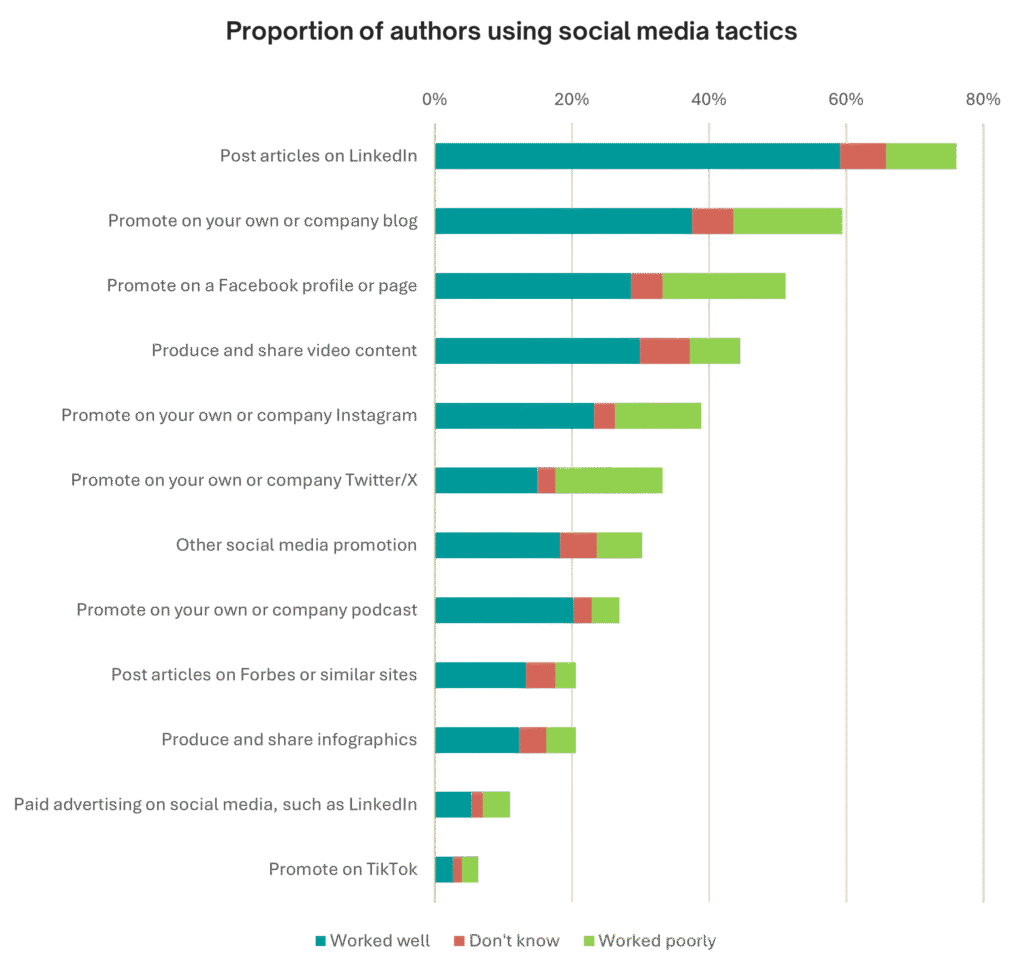
Leading Social Media Tactics Were LinkedIn, Blogs, Facebook, and Video
LinkedIn was by far the most popular tool for social media book promotion, with 76% of authors using it and three-fourths of those reporting success. The most effective social media tactics, according to authors who used them, were LinkedIn, promoting on a company’s podcast, and producing and sharing videos. X (formerly Twitter) was notably ineffective; 33% of authors tried it, but fewer than half said it worked well. TikTok and social media ads were unpopular and ineffective. About 6% of authors didn’t promote at all with social media.
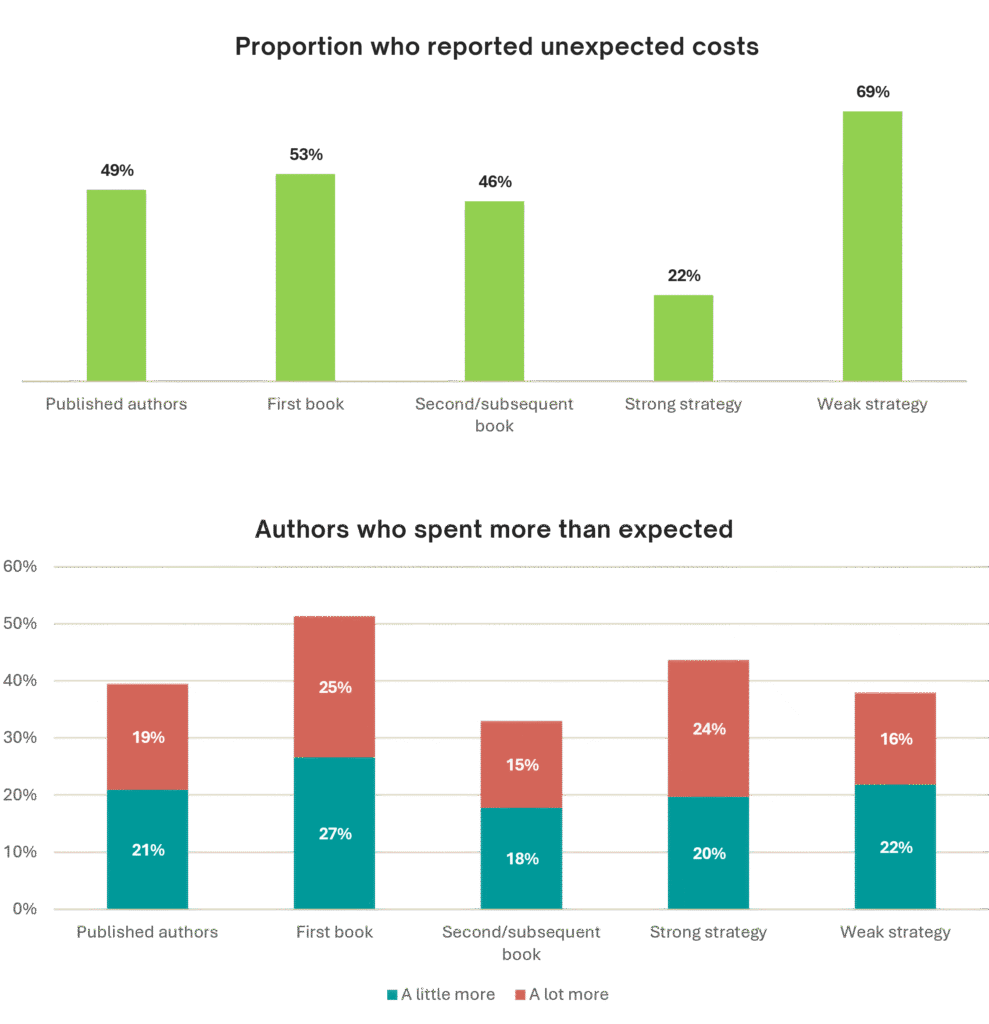
Authors, Especially New Ones, Had Unexpected Costs
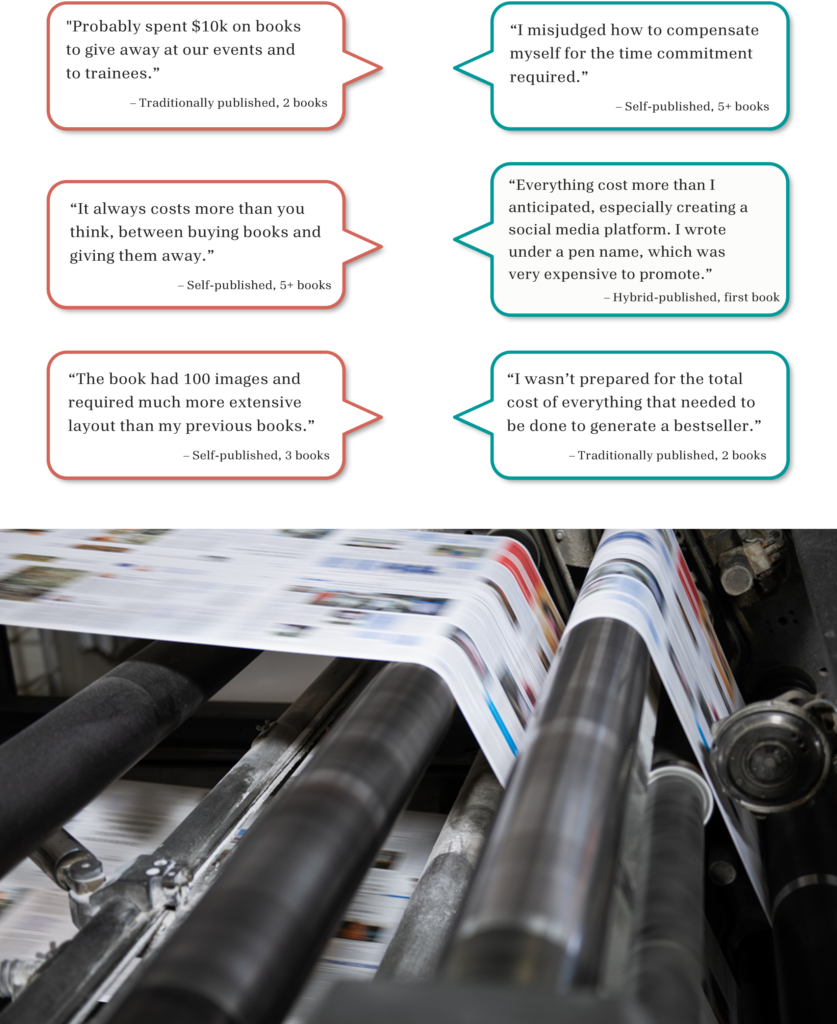
About half of authors reported unexpected costs. Four out of ten authors spent more than expected, and 19% spent much more. First-time authors saw more cost overruns.
REVENUES
Median Revenue Generated Per Book Was $18,200
To capture the full revenue impact of the book, we summed up new revenues in many categories for each author. Like expenditures, revenues generated by books are highly variable. Books published less than 6 months earlier generated a median return of only $12,000, while those out at least 6 months generated $25,000. To fairly compare groups, we restricted the rest of our analysis to books published for at least 6 months. Comparing median revenues for such books, traditionally and hybrid-published books were much more lucrative than self-published books. Among respondents with books out 6 months or more, 11% reported no revenue at all, but 18% generated more than $250,000 in revenue. Among authors who reported zero revenues, 77% of them said revenue was not their primary goal.
Revenue Drivers Included Ghostwriters, Clear Strategy, and Launch PR
We carefully examined variables that were correlated with increased revenue for books out for at least 6 months. While there’s no way to prove causation, among authors whose primary goal was financial, those with a clear strategy earned more than $100,000, twice as much as those without. Ghostwritten books generated far more income: $92,500 was the median. And authors who hired a PR team for their book launch brought in a median of more than $100,000. Surprisingly, first books often out earned second and subsequent books; clearly, pumping out book after book is not the way to maximize earnings.
Books Generated a Wide Array of Financial Benefit
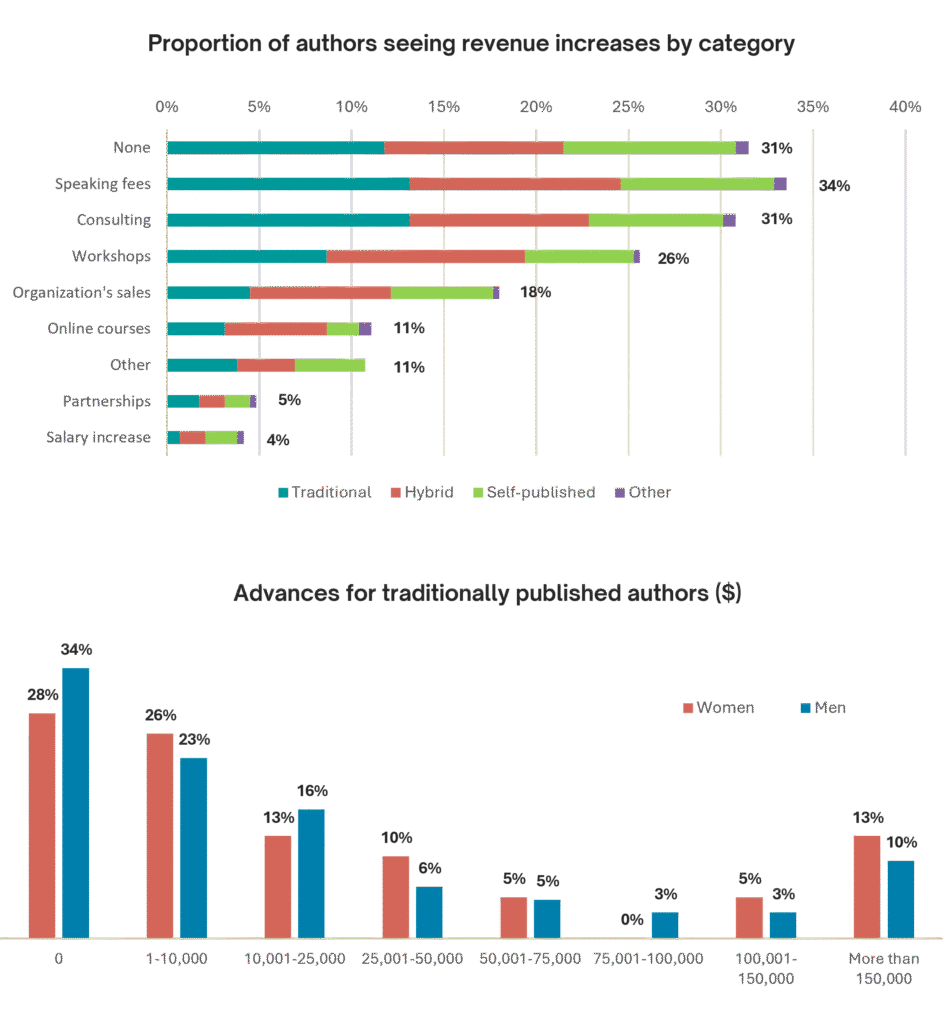
About one published author in three saw increases in speaking fees and in consulting; nearly
as many observed increases in workshops. Less than one in twenty received a raise in pay.
The median book advance for the 104 traditionally published authors in our sample was just $5,500; 31% got no advance, and 11% got more than $150,000. Advances were skewed by gender; the median advance for women authors was $5,000 versus $7,750 for men.
Revenue Increases Went Far Beyond Book Sales
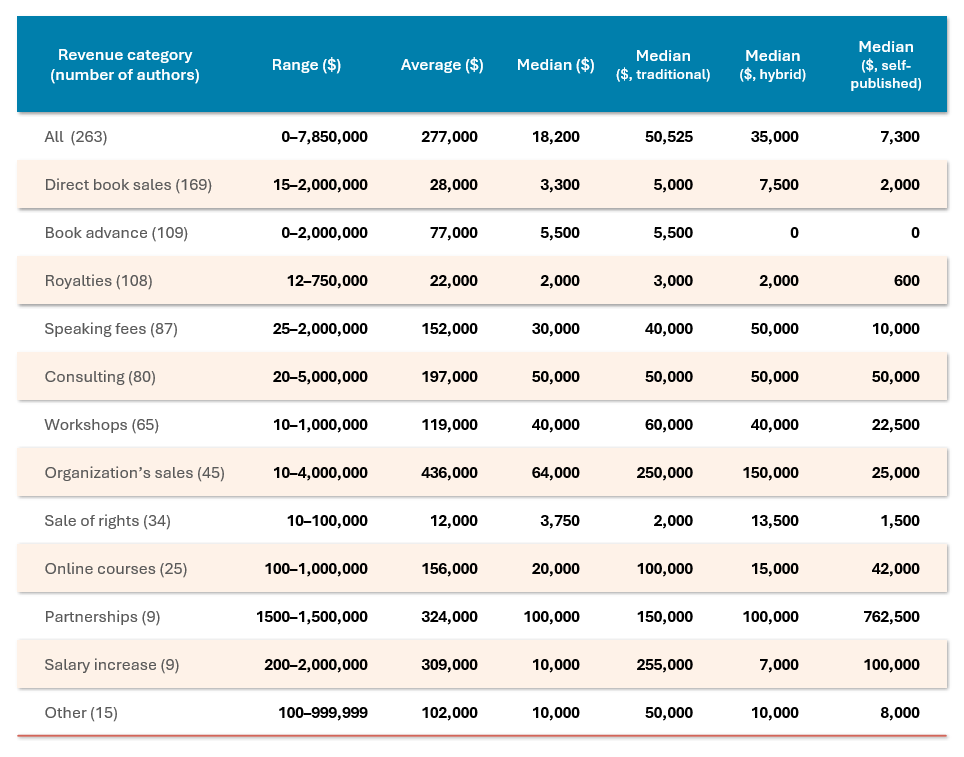
Traditionally published authors typically generated $8,500 in advances and royalties, and other publication models generated far less. The real revenue gains were in other categories. Among authors who generated revenues in each category, speeches generated a median revenue of $30,000; consulting, $50,000; and workshops, $40,000. Some authors saw windfalls in categories like corporate sales, partnerships, and salary increases. More than 70% of authors also reported increases in leads or gigs. Authors who reported increases typically saw ten speaking gigs, seven workshop gigs, dozens of consulting leads, or scores of coaching sessions. Traditionally published books generated more, but hybrid- and self-published books also boosted engagement.
Authors Saw Boosts in Credibility, Personal Brand
Nearly nine in ten authors agreed that writing a book was a good decision, regardless of
their publishing model. One reason: nonmonetary rewards. Among the authors we reached,
68% said they were now more credible to prospects and clients, while 61% said their
personal brand was worth more. Authors also saw improvements in podcast requests, social media mentions and followers, and global visibility. Only 8% saw no improvements in these
soft measures.
PROFIT
Median Gross Profit was $11,350
We computed gross profit (total increase in revenues minus total spending) to determine what made it most likely that a book would generate a positive return. Once again, there was a wide range of results: one author spent $180,000 more than they made, while another generated a gross profit of nearly $8,000,000. Two-thirds of books out for at least 6 months had a net positive gross profit. Traditionally published books were the most profitable, with a median of $52,500, but hybrid-published and self-published books were also mostly profitable. We also looked at ROI; after paying expenses, the median book generated a profit of $2.33 per dollar spent.
Traditional Publishers, Launch PR, Ghostwriters Correlated with Profit
What makes a book profitable? First off, patience: books published for at least 6 months approached twice the profitability of those that were newer, with a median profit exceeding $11,000. Traditional publication is no guarantee of success, but traditionally published books had a major edge in profitability, in part because of book advances. Ghostwritten books generated a median gross profit of more than $43,500 after 6 months, despite the cost of the ghostwriter. Books launched with a PR campaign generated a median gross profit of more than $50,000, while those launched with a clear revenue strategy neared $100,000. While only nine authors in our survey had books out for at least 6 months and had paid for bookstore placement, they had an astounding median gross profit of $430,000; even so, it’s a stretch to assume the placement drove the profit.
Bigger Spenders Were More Successful
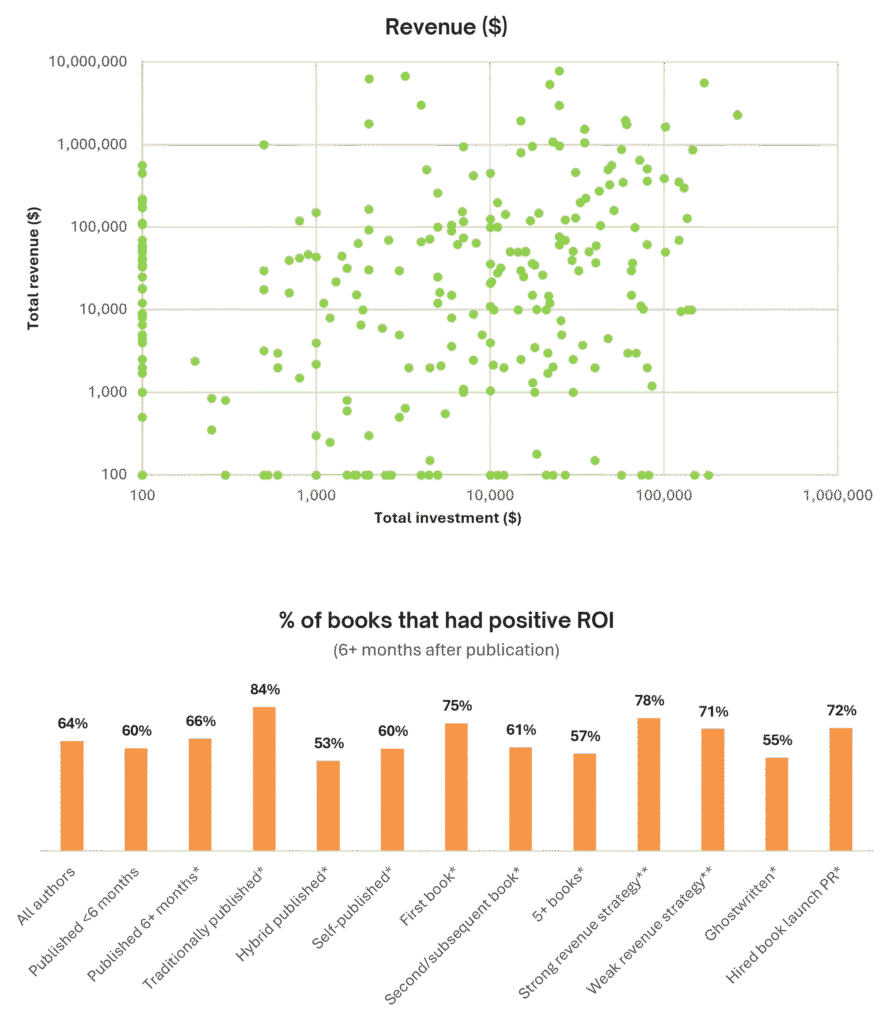
There was a strong correlation (R = 0.243, p < .01) between the money authors invested and
the value they extracted. On average, every dollar spent on a book returned $1.24 in revenue.
In every category, a majority of authors had a positive return.
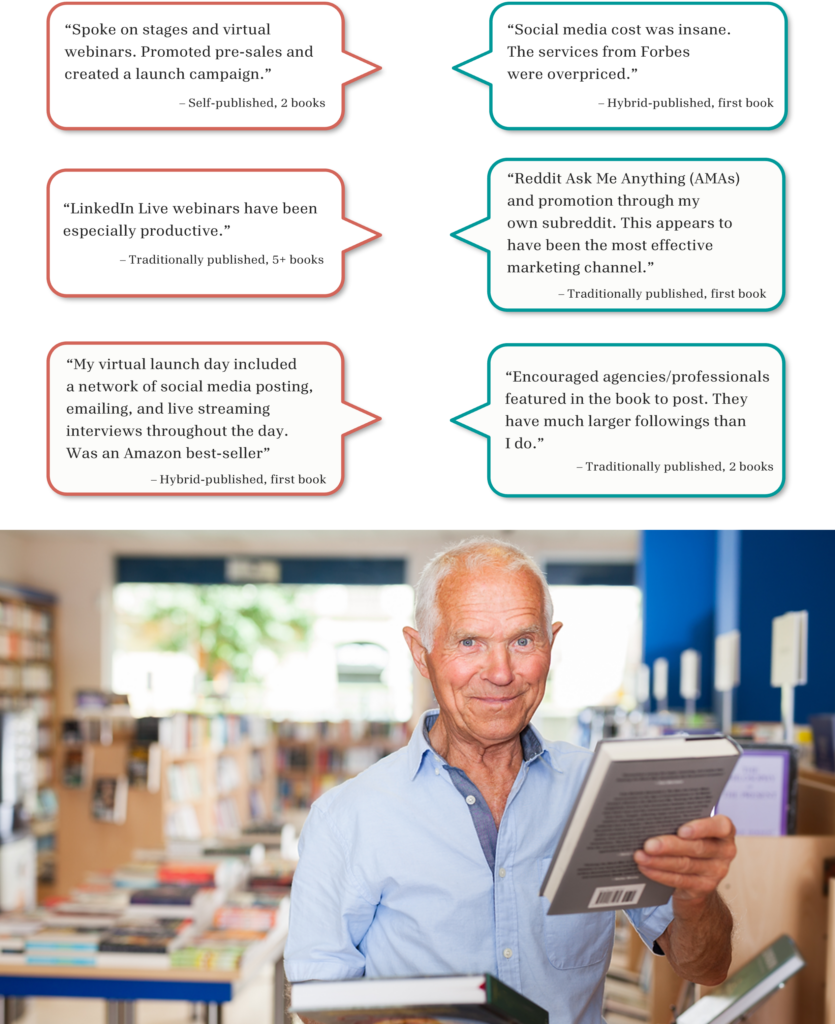
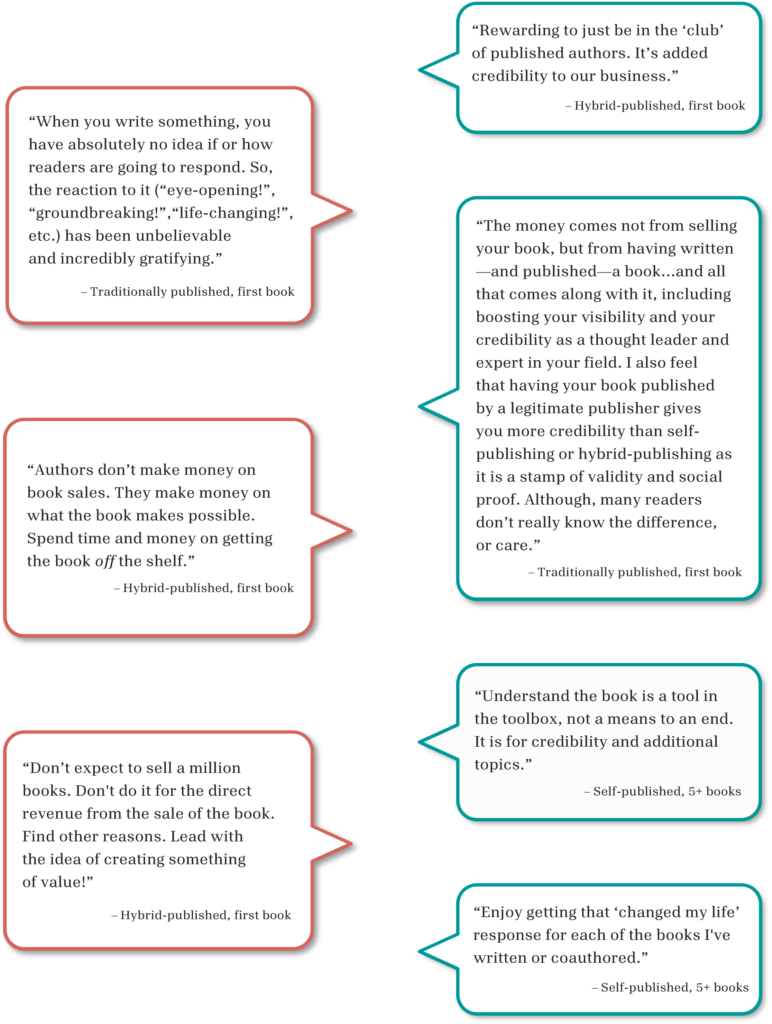
Authors Share Opinions
About Our Sponsors
Amplify Publishing Group is a leader within the hybrid publishing space, partnering with media organizations and thought leaders to bring new and diverse ideas to the printed page. Launched in 2003 with a single title, APG has since risen to what it is today—one of the fastest growing and most respected hybrid publishing companies in the world. At the core of Amplify’s ethos is a prioritization of innovation: over the past two decades it has brought new and exciting ways to publish to the fore, legitimizing the fastest-growing sector of the market to date. It now stands strong with six imprints and an expert team of publishing professionals.
Gotham Ghostwriters is the nation’s premier ghostwriting agency. With a network of 4,000-plus editorial specialists—and connections to a larger universe of 20,000 freelance professionals—Gotham offers authors, thinkers, and speakers the unparalleled ability to find the right writing partner for their priorities. Gotham also helps its clients find the right publishing path and get the most impact for their ideas through its extensive industry relationships with literary agents, publishers, media outlets, and PR and marketing consultants.

Smith Publicity has been a global leader in creative publicity and public relations since 1997, helping authors and experts expand their influence and build authority beyond the pages of a book. Its clients include New York Times bestsellers, debut authors, CEOs, speakers, academics, and subject matter experts. Smith Publicity secures media appearances that boost visibility, build credibility, and fuel business and platform growth. Recognized in PR News’ “Agency Elite Top 100” and as top publicists by Qwoted, Smith Publicity’s team continually innovates with clients and their teams to build strategies that amplify their ideas for lasting impact.

Thought Leadership Leverage serves individuals and organizations who generate revenue through their new and existing thought leadership. For the past two decades, it has focused on B2B thought leadership in three areas: strategy, go-to-market, and enterprise sales. Many of its clients have published books and want to create new revenue streams and produce greater impact from their IP. Others have spent years creating value by being present in the room and the Zoom. Now, they’re looking for a fresh business model. Thought Leadership Leverage can help clients codify their IP, shape it into market-ready products, and turn one-off transactional client engagements into enterprise-scale opportunities.
The Research Team
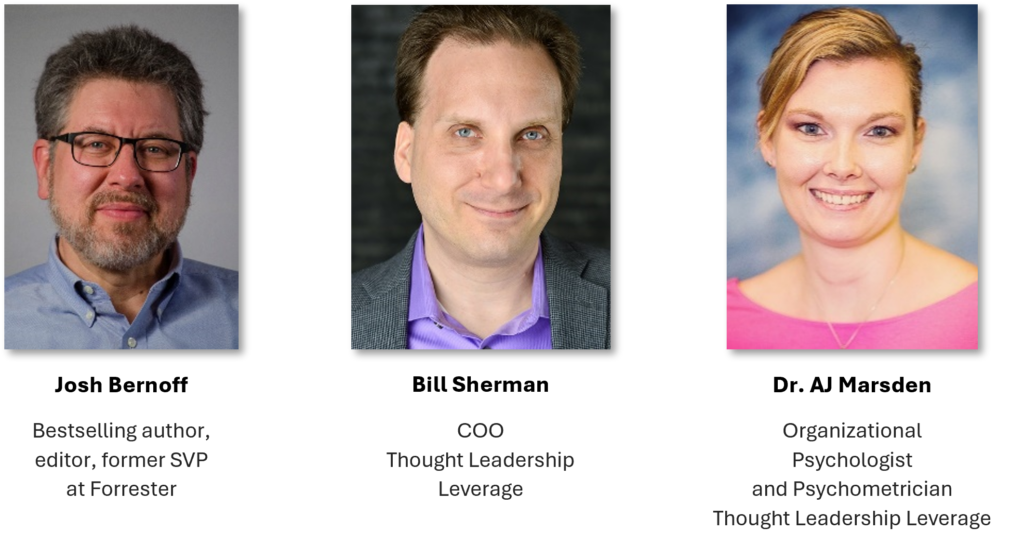
Josh Bernoff is the author of Build a Better Business Book: How to Plan, Write, and Promote a Book That Matters, a comprehensive guide for business authors. He has written or collaborated on more than 50 business book projects that have generated more than $20 million for their authors. He helps authors with ghostwriting, developmental editing, book proposals, and idea development. His books include Groundswell, a BusinessWeek bestseller, and Writing Without Bullshit. He was previously senior vice president, idea development at Forrester, where he launched Technographics, a large-scale consumer survey product.
Bill Sherman, the COO of Thought Leadership Leverage, has a passion for data-driven
thought leadership. He has spent his career helping thought leaders sharpen their thinking, create testable hypotheses, design scalable solutions, and sell them into Fortune 500 and
global organizations.
AJ Marsden, PhD, as Organizational Psychologist and Psychometrician at TLL, develops leadership and organizational measures, creates organizational- and competency-based models, and conducts validity and reliability analyses of various assessments. At the college level, she teaches courses in cognitive neuroscience, research methodology (quantitative, qualitative, and advanced), and behavioral statistics.
Supporting Sponsors
We’d also like to thank the following organizations that graciously shared the survey with their author contacts:
| Bookbound | Marketing Book Podcast |
| Biz Book Publishing Hub | Marshall Goldsmith 100 Coaches |
| Carlton PR & Marketing | Message Design Institute |
| David Moldawer | Monaco Associates |
| Extraordinary Business Book Podcast | Page Two |
| Greenleaf Book Group | Stacy Ennis |
| The Hot Sheet – Jane Friedman | The Tilt Newsletter |
| Ideapress | Walsh Books |
| Intelligent Ink | Windword Literary Services |
| Jane Wesman Public Relations | Zilker Media |
Methodology
This survey was supported by four sponsors: Amplify Publishing, Gotham Ghostwriters, Smith Publicity, and Thought Leadership Leverage. Support by Amplify and Gotham was financial; TLL and Smith’s contributions
were in-kind. Sponsors did not influence or review findings before publication. This is a non-probability survey of business authors. Authors were recruited by the four sponsors as well as the 20 supporting sponsors listed on page 31 of the report. Supporting sponsors were not paid for their support. Respondents received
no guaranteed monetary compensation; however, some randomly chosen respondents will receive copies of Build a Better Business Book or free consultations
with TLL or Josh Bernoff.
If this were a random sample, margin of sampling error for statistics from the whole sample would be ±6 percent. Margin of sampling error for subgroups is correspondingly greater. Most of the statistics shown are for 301 published authors who completed the survey up to but not necessarily including the racial and demographic questions at the end of the survey. All questions relate to the authors’ most recently published non-fiction book.
Unpublished authors were not included in the analysis. All data were collected via an online survey platform between the months of April and August of 2024.
The definition of “strong strategy” in this study includes authors who, with respect to their volunteered primary goal, responded “I had a very specific plan for achieving my goal with every single step outlined” or “I had a moderately specific plan for achieving my goal with a few steps outlined.” Other authors were classified as having a weak strategy. The symbol * indicates analysis limited to authors whose books had been published at least six months earlier (228 respondents); this analysis is appropriate for measuring revenue and profit. The symbol ** indicates analysis for authors whose primary goal was revenue, including specifically, increasing engagement, generating leads, or selling books (81 respondents). Gross profit is defined as total revenue minus total expenses. ROI is defined as gross profit divided by expenses. For ROI calculations, all authors were assigned a minimum of $100 in expenses. For the log-log chart on p. 26, all authors were assigned a minimum of $100 in expenses and $100 in revenues. Many statistics listed here use medians rather than means to reduce the influence of extreme values.
Credits
Survey design: Bill Sherman and Dr. AJ Marsden (Thought Leadership Leverage) and Josh
Bernoff. Based on a previous survey by Josh Bernoff.
Data analysis: Dr. AJ Marsden and Josh Bernoff
Report design: Thought Leadership Leverage
Report author: Josh Bernoff
This report and survey design are copyright © 2024 by Amplify Publishing Group, Gotham Ghostwriters, and Thought Leadership Leverage. All rights reserved.
Thought Leadership Leverage’s persona definitions referenced on p. 7 are available at https://thoughtleadershipleverage.com/who-we-serve/
News media and publishing industry sources are explicitly permitted to quote statistics from this report, provided they identify the source as “A Comprehensive Study of Business Book ROI” and provide a link to the survey results at AuthorROI.com.
To download a copy, visit AuthorROI.com.
For media inquiries, speaking requests, or further information about the study, please contact:
Marissa Eigenbrood, President, Smith Publicity, Inc. at marissa@smithpublicity.com or
856-489-8654 x1003
For more information, contact us at info@AuthorROI.com.